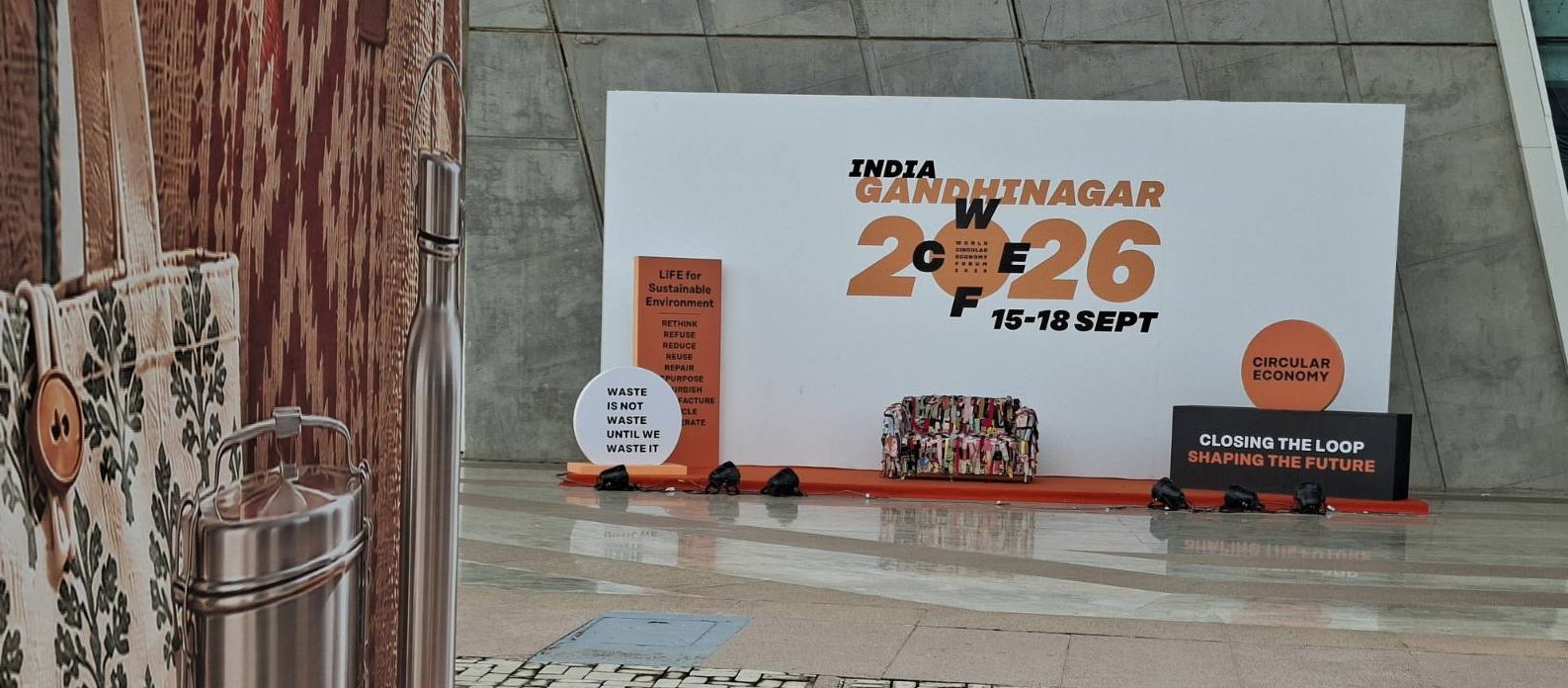
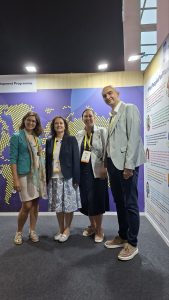
Innovative circular solutions from Serbia, ranging from pencils made from old newspapers and washable children’s books to products made from textile waste and recycled rubber, are being showcased at the World Circular Economy Forum (WCEF 2026). Representatives of the United Nations Development Programme (UNDP) and the Ministry of Environmental Protection are showcasing some of Serbia’s most promising circular solutions to forum participants, demonstrating how waste can be turned into a valuable resource and how sustainability can drive new business opportunities, innovation and local development.
This year’s World Circular Economy Forum takes place from 15 to 18 September in Gandhinagar, India. The main Forum programme is held on 15 and 16 September, followed by accelerator sessions on 17 and 18 September. Now in its tenth edition, WCEF brings together policymakers, businesses, investors, researchers and innovators from around the world. Initiated by the Finnish Innovation Fund Sitra, WCEF has been held since 2017. This year’s theme is“Circular Economy: Transition for People and Prosperity.”
The Forum focuses on practical, scalable solutions that can contribute to more resilient economies, more efficient use of resources and sustainable economic growth. The global economy is still largely based on a linear model of production and consumption, in which much of what we use is discarded after a relatively short period. This is why the circular economy is becoming increasingly important as an approach that keeps products, materials and resources in use for as long as possible.
Serbia’s Circular Solutions in the Spotlight
The Serbian initiatives showcased at the Forum include a wide range of examples demonstrating how waste materials can be transformed into innovative and useful products. New Pen turns old newspapers into pencils and coloured pencils, while Koštica dizajn uses textile and leather scraps, together with dried cherry pits, to create comfortable cushions and ottomans. The Eco×Deco circular initiative transforms textile waste from the construction sector into modern furniture and decorative items, while Deto gives leftover paper and cardboard a new life by turning them into practical and decorative boxes. Another solution presented at the Forum is Fragment, which develops recycled-glass panels for use in interiors and construction.
WCEF 2026 also features solutions that contribute to more sustainable cosmetics and food production, as well as more responsible management of natural resources. Yasna Bio is developing a circular model for hazelnut cultivation and processing in which by-products are put to new uses, from natural cosmetics and food products to humus and gluten-free protein flour. The Spasimo vunu initiative turns raw sheep’s wool, often treated as waste, into a valuable natural resource used to make sustainable products and innovative materials for agriculture. The Agroštit project transforms recycled rubber into protective guards for young trees, helping to reduce waste while supporting greener urban and agricultural spaces.
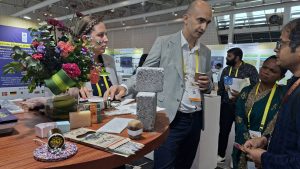
The Forum also showcases initiatives promoting sustainable consumption and social entrepreneurship. Mekiša is developing a new generation of children’s books that can be washed, folded and reused, extending their lifespan and reducing the need for frequent replacement. Bio Idea, a social enterprise that brings together small-scale producers of eco-friendly products, makes natural soaps from plant-based oils without synthetic preservatives, additives or colourants, combining local production, social responsibility and sustainability.
Although they come from different sectors, from agriculture and manufacturing to design, education and social entrepreneurship, all of these solutions share a common goal: to reduce waste, extend the useful life of resources and create new value from materials that would otherwise be discarded. These examples demonstrate that the circular economy is more than a theoretical concept. It is a practical approach that can contribute to environmental protection, local development and the creation of new socio-economic opportunities.
The presentation of Serbian initiatives at the World Circular Economy Forum is organised within the project “Reducing the Carbon Footprint of Local Communities by Applying Circular Economy Principles in the Republic of Serbia – Circular Communities”, implemented by UNDP in partnership with the Ministry of Environmental Protection, with financial support from the Global Environment Facility (GEF).
The next World Circular Economy Forum will take place in New York in June 2027, continuing the global dialogue on the role of circular economy solutions in building more sustainable and resilient societies.