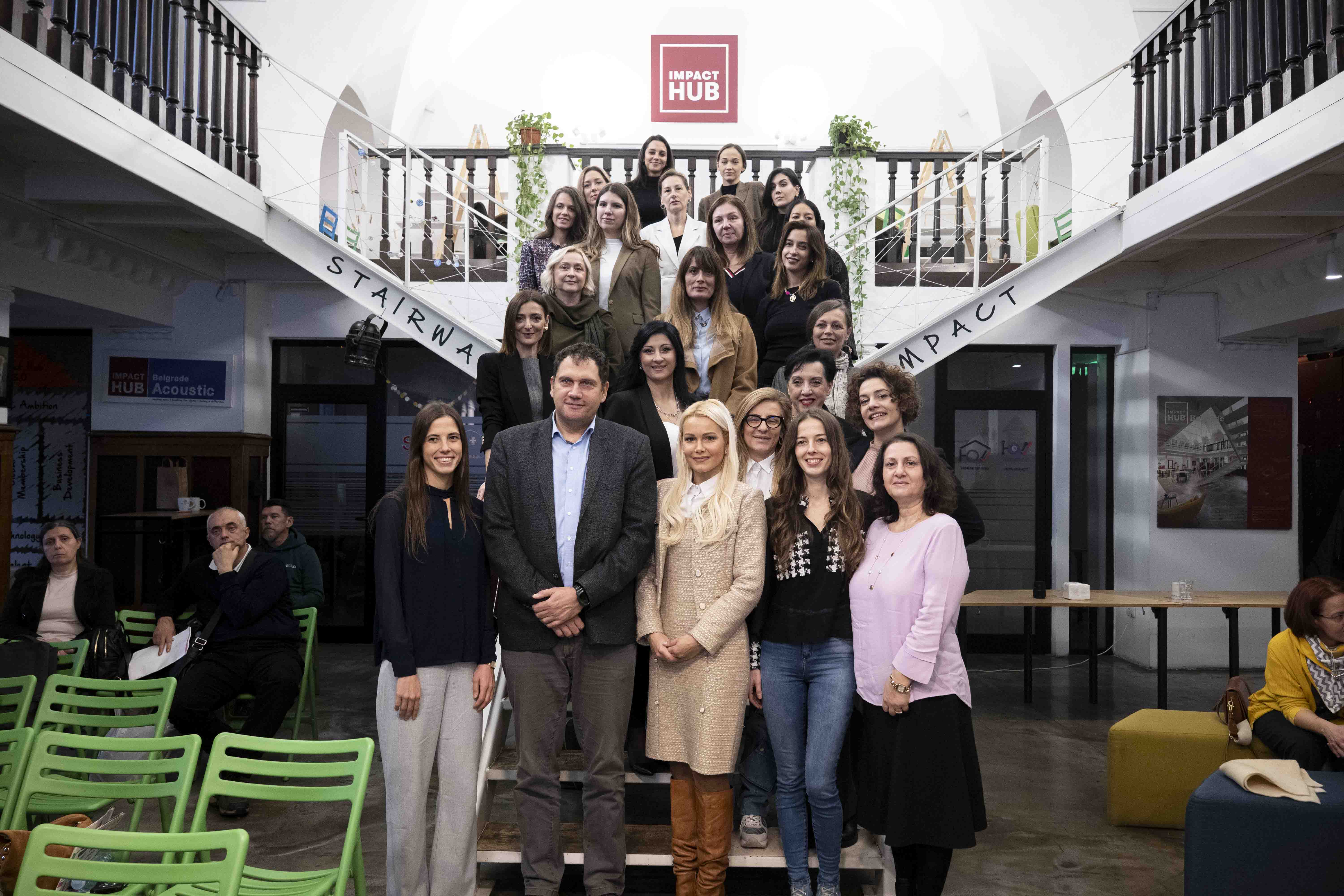
The Ministry of Environmental Protection and the United Nations Development Programme (UNDP) presented 20 innovative solutions developed by women entrepreneurs from Serbia, selected through the Public Call for Strengthening the Role of Women in the Circular Economy. The event was organized with the support of the Global Environment Facility (GEF).
The awarded women entrepreneurs come from different parts of Serbia and have developed circular solutions in areas such as agriculture, architecture, food production, cosmetics, and textiles. The implementation of these solutions will contribute to waste reduction, the conservation of natural resources, and the development of women’s entrepreneurship, while offering sustainable products and services on the market.
The Assistant Minister of Environmental Protection, Teodora Spasojević, emphasized that the Ministry is committed to the development of the circular economy as one of the key tools for achieving sustainable development.
“In partnership with UNDP, we provide support to local communities, as well as to the business and research sectors, in implementing innovative ideas and solutions for applying circular economy principles. This year, our focus is on supporting women’s entrepreneurship in the circular economy, as well as informal waste collectors,” Spasojević said. Speaking about the “Accept the Circular Challenge” initiative, implemented by the Ministry of Environmental Protection since 2022, she noted that more than 20 companies have participated so far, voluntarily committing to measures aligned with circular economy and sustainable development principles.
“We are very proud of the results achieved, which encourage us to continue supporting projects that contribute to environmental protection as a prerequisite for a healthy and high-quality life for our citizens,” she added.
The Head of the Sustainable Development Sector at UNDP Serbia, Žarko Petrović, stated that UNDP supports the development of the circular economy within the broader Green Transition Acceleration Initiative, implemented with the support of the European Union, Sweden, Switzerland, the Government of Serbia, and GEF.
“To date, we have provided co-financing worth 4 million dollars, enabling more than 100 circular initiatives and investments to take root across Serbia, with a total value exceeding 30 million dollars. These initiatives are already contributing to waste reduction, resource conservation, and the creation of green jobs,” Petrović emphasized. The total award fund allocated for circular initiatives by women entrepreneurs amounted to 240,000 dollars, with individual grants ranging from 5,000 to 20,000 dollars, depending on the complexity of each innovation.
Jelena Janković from the “Zona Eksperimenta” association, which produces furniture from construction textile waste, highlighted that the circular award was a key incentive for launching the Eco×Deco initiative, which combines recycling, design, and women’s entrepreneurship.
“The support enabled me to transform material that usually has no value into a product, and the entire process was concrete, encouraging, and inspiring. This experience showed me that small ideas can become significant changes when they receive the right kind of support,” Janković said.
The circular award was also instrumental for entrepreneur Mina Vereš, who developed the natural Tamjanika grape juice brand “TamTaNika” and initiated the processing of biomass residues into a superfood supplement.
“Thanks to this support, we began research into the nutritional properties of flour made from grape pomace after juice production. This project represents our first step toward full waste valorization and the creation of new, healthy products from local resources,” Vereš explained.
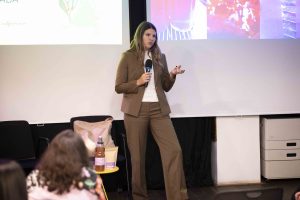
In addition to women entrepreneurs’ innovations, initiatives awarded under last year’s UNDP public calls in the field of circular economy were also presented, including those focused on science–industry collaboration, as well as support for integrating informal waste collectors into the formal waste management system. Initiatives implemented by large companies in Serbia—Delta Holding, Nestlé, and Stil Impex—were also showcased as responses to the Ministry of Environmental Protection’s Circular Challenge, setting an example for smaller companies in the agriculture, hospitality, and recycling sectors. More information on all awarded initiatives can be found in the brochure available here.

This event was organized within the project “Reducing the carbon footprint of local communities by applying the principles of the circular economy in the Republic of Serbia – Circular Communities,” implemented by UNDP in partnership with the Ministry of Environmental Protection of the Republic of Serbia, with financial support from the Global Environment Facility (GEF).